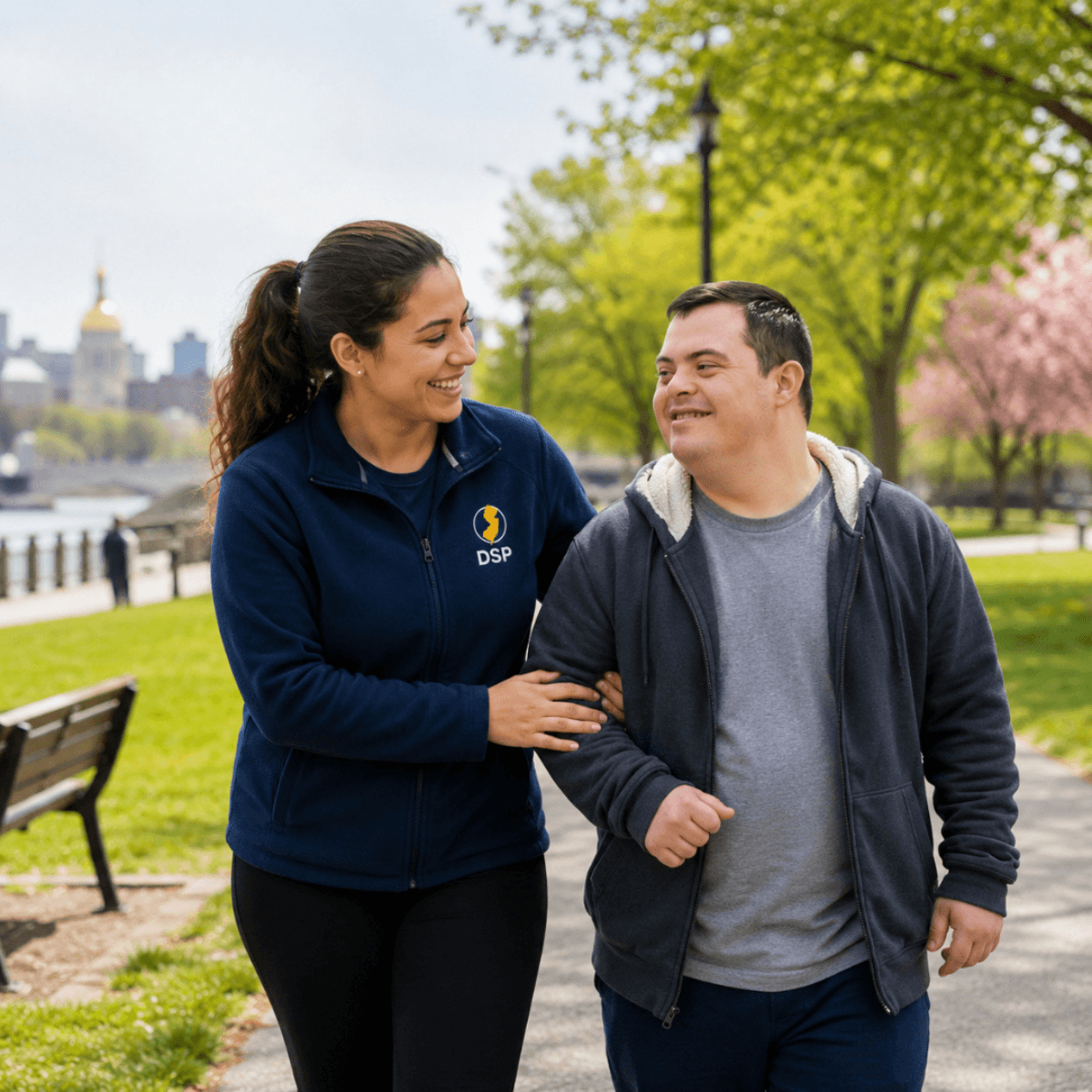
Direct Support Professionals are often confused or lumped together as the same role with Personal Care Assistants or Aides (PCA), or Home Health Aides (HHA). This is incorrect. A DSP is very different from a PCA or an HHA. While they all provide hands-on assistance, they differ significantly in their target populations, training requirements, medical scope, and their core objectives or role.
An HHA primarily provides care for older adults, chronically ill patients, or individuals recovering from injury, illness, or surgery who have ongoing medical needs by providing medically supervised personal and health care. They assist with activities of daily living (ADLs) as well as tracking vital signs, assisting with simple dressing changes, and supporting medication routines.
A PCA primarily works with seniors, individuals with physical disabilities, or people needing everyday support who do not require skilled nursing or medical care. They provide non-medical daily living and companionship for clients at home by assisting with grooming, bathing, dressing, meal preparation, errands, and light housekeeping.
By contrast, DSPs:
- Work with individuals with intellectual or developmental disabilities (I/DD), autism, traumatic brain injuries, or behavioral health needs.
- The core objective goes beyond providing care; it is teaching and empowerment. Instead of just doing tasks for the client, a DSP works alongside them to build life skills, foster independence, manage behavioral needs, and facilitate community and job inclusion (e.g., budgeting, public transit, social outings).
- DSPs meet the individuals where they are, so work settings vary, and could change, and may include private homes, group homes, day programs, schools, supported employment environments, community/recreational spaces, etc.
- Training & Certification also differs: New Jersey requires onboarding and specialized training, as well as fingerprinting, background and other checks to work with clients. In addition, provider agencies often mandate specialized core competencies, ethics training, CPR/First Aid, etc.